
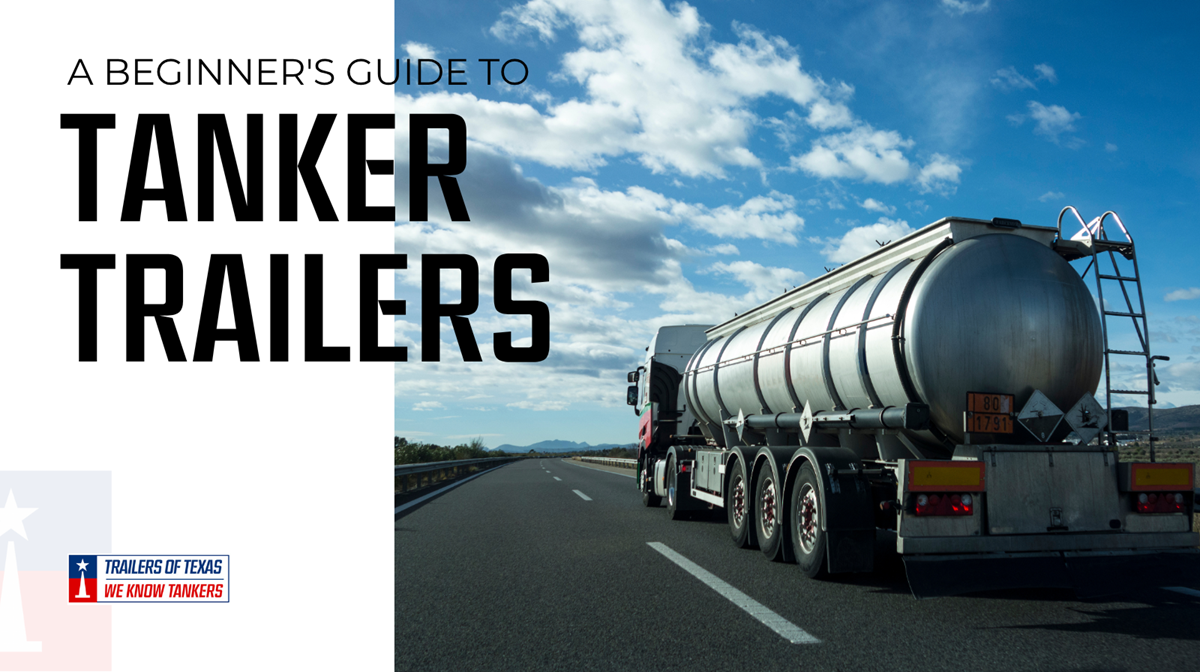
Tank trailers, also known as tanker trailers, are specialized transport vehicles designed and built to move bulk liquids, gases, or dry materials safely across long distances. From hauling fuel and petroleum products to chemicals, food-grade liquids, and cement, these trailers are the backbone of many key industries. Their distinctive, polished tanks are a familiar sight on highways across North America, a symbol of efficiency, reliability, and precision engineering.
Whether you’re looking to buy, lease, or learn more about tank trailers, understanding the different types and their applications is essential. In this guide, we’ll break down everything beginners need to know. From fuel transport trailers and chemical tank trailers to pneumatic dry bulk trailers and food-grade tankers.
The Design of Tank Trailers
Tank trailers are specifically engineered to transport liquids, gases, and dry bulk materials safely and efficiently over motor highways. Every aspect of a tank trailer’s design, from its chassis and suspension to its valve configurations, is built with performance, safety, and reliability in mind, making it a vital asset for modern bulk transport operations. Their design combines strength, stability, and precision to ensure every load is delivered securely.
Most tank trailers feature a cylindrical, horizontal tank mounted on a reinforced chassis. This rounded shape evenly distributes internal pressure and minimizes liquid surge during acceleration or braking. The tank’s low center of gravity also helps maintain road stability, especially when navigating curves or uneven terrain.
Depending on the cargo, the tank body may be constructed from aluminum, stainless steel, or carbon steel. Aluminum is lightweight and ideal for petroleum transport, while stainless steel provides superior corrosion resistance for food-grade and chemical applications. For asphalt and other temperature-sensitive materials, tanks are often insulated or equipped with heating systems to maintain consistent viscosity.
Inside a tank, baffles and compartments play a crucial role. Baffles reduce liquid movement, improving handling and safety, while compartments allow multiple materials to be transported within one trailer. In compartmentalized tank trailers, each section can hold a different liquid such as multiple fuel grades or chemical types, making them ideal for flexible, multi-product delivery. For pneumatic tank trailers, pressurized air systems enable the efficient loading/unloading of dry bulk products like cement or lime.
Additionally, features such as manholes for access and cleaning, emergency valves and grounding systems for spill prevention, and anti-static protection are integrated to meet DOT and ASME safety standards. The aerodynamic design and optimal height also ensure better fuel efficiency and easy clearance under bridges.
Types of Tank Trailers
Tank trailers come in a wide range of designs, each built for specific types of cargo load and operating conditions. The two main ways to categorize them are by the kind of material they carry and by the material they’re made from. Understanding these distinctions helps buyers choose the right trailer for their hauling needs.
Types of Tank Trailers by Cargo
Designed for the safe and efficient transport of bulk liquids such as fuel, chemicals, fertilizers, and asphalt. Built from stainless steel or aluminum with optional multi-compartment designs, they offer durability, versatility, and DOT-compliant performance for a range of industries.
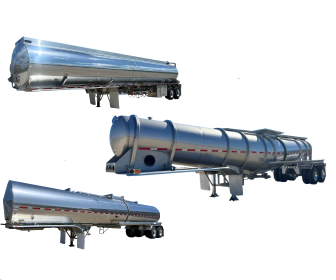
These DOT-406 compliant trailers are among the most common tanker trailers on U.S. roads. Used to transport gasoline, diesel, and jet fuel, they’re typically constructed from lightweight aluminum for better payload capacity. Many include multiple compartments for carrying different fuel grades in a single trip.

These are stationary units, used for on-site storage of dry bulk materials like cement, at construction sites, terminals, or plants. They’re not meant for highway transport. Instead, they’re placed at a job site and connected to pneumatic trailers for filling and dispensing material.
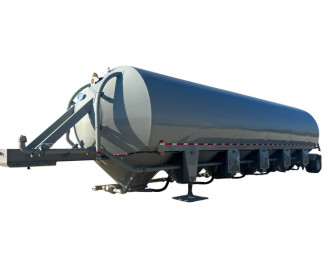
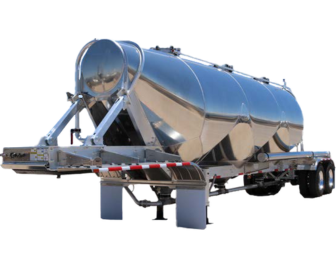
Designed to haul dry bulk products like plastic pellets, bulk cement, lime, or sand from one location to another. They use compressed air to unload cargo into silos or hoppers at the destination.
These tank trailers are designed to transport hazardous and non-hazardous liquids safely over motor highways. There are two main types- DOT 407/MC 307 stainless-steel trailers for non-corrosive chemicals like solvents and petroleum-based products, and DOT 412/MC 312 trailers with FRP or rubber linings for corrosive liquids such as acids or caustic solutions.

Used for transporting consumable liquids such as milk, water, wine, and corn syrup. These trailers are made from high-polish stainless steel, feature smooth internal surfaces for easy cleaning, and often come equipped with temperature-control insulation. There are also food grade dry bulk variations that can carry foods such as sugar, salt, and flour.
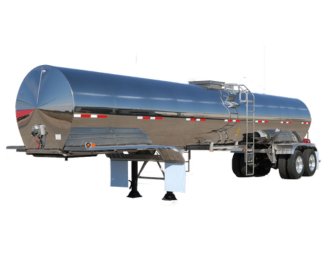
Built for heavier, viscous materials like crude oil and lubricants, these DOT-407 tankers are reinforced for added durability. Some models feature heating coils or insulation to maintain flow during transport.
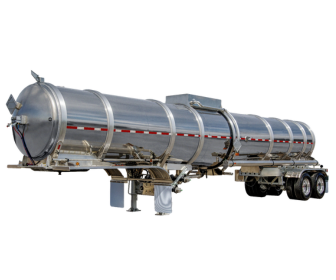
Specialized trailers equipped with burner systems or heat-tracing lines to keep asphalt and bitumen at the required temperature. Their insulation ensures the product remains pourable upon delivery.
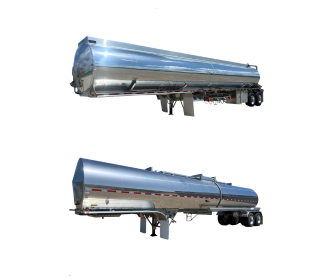
These tanker trailers are ideal for transporting a wide range of non-hazardous products such as water, fertilizers, and molasses in bulk. Available in various sizes and configurations, they offer reliable loading and unloading with multiple discharge options. With capacities between 5,000 and 7,500 gallons, these trailers can also be equipped with hydraulic or gasoline-powered pumps for smoother and more efficient operations.

Types of Tank Trailers by Composition
- Aluminum Tank Trailers: Commonly used in the fuel and petroleum industry for their lightweight design, allowing higher payloads and better fuel efficiency. Aluminum resists rust but isn’t suited for highly corrosive materials.
- Stainless Steel Tank Trailers: Common in food-grade and chemical transport, stainless steel trailers are durable, hygienic, and resistant to contamination or corrosion — though heavier than aluminum.
- FRP Tank Trailers (Fiberglass Reinforced Plastic):
FRP tank trailers are built from fiberglass-reinforced plastic, offering exceptional corrosion resistance for hauling heavy and corrosive acids like bleach and sulfuric acid. They’re lightweight, non-conductive, and often used when stainless steel may still corrode or react with the cargo. FRP units provide a cost-effective and long-lasting solution for specialized chemical transport applications. - Carbon Steel Tank Trailers: Ideal for asphalt, oil, and other non-corrosive liquids where weight isn’t a primary concern. They’re cost-effective and highly durable.
How Tank Trailers Work
At their core, tanker trailers are engineered to make the process of loading, transporting, and unloading bulk materials as safe and efficient as possible. While designs vary depending on the load type, i.e. fuel, chemicals, or dry bulk, the operating principles remain similar.
Each trailer features manholes for access and inspection, baffles to minimize liquid surge, and compartments that allow multiple products to be transported simultaneously. During loading, the product is pumped or gravity-fed into the tank through top or bottom fittings, then sealed with vapor-tight valves to maintain safety and purity.
During transport, the trailer’s insulation systems help regulate temperature-sensitive cargo such as food-grade liquids or asphalt. For unloading, discharge valves and pumps move the material efficiently to storage tanks or on-site systems. In pneumatic tank trailers, compressed air systems are used to push dry bulk products through hoses directly into silos.
Safety is built into every step of the process. Modern tank trailers are equipped with pressure relief valves, emergency shutoff systems, and grounding cables to prevent overpressure, spills, or static discharge.
Together, these systems make tank trailers an efficient and secure solution for bulk material transport.
For a closer look at each process, explore our detailed guides on:
- Loading and Unloading Fuel Tank Trailers
- Loading and Unloading Chemical Tank Trailers
- Storage Pig Loading and Unloading Systems
Choosing the Right Tank Trailer
Choosing the right tank trailer starts with understanding what you’re hauling and how it needs to be transported. The type of cargo determines the trailer’s material, configuration, and safety features. For instance, fuel tank trailers are typically built from lightweight aluminum for higher payload efficiency, while chemical tank trailers use stainless steel or FRP linings to handle corrosive materials. Pneumatic tank trailers and storage pigs rely on air pressure systems to transport and discharge dry bulk products like cement or lime.
You’ll also want to consider:
- Capacity requirements (single or multi-compartment tanks). See Capacity Guide
- Regulatory compliance (DOT, ASME, or food-grade standards) Read A Comprehensive Guide to DOT 406, 407, 412 and MC-331 Tanker Trailers
- Temperature control and insulation for sensitive products
- Ease of cleaning, maintenance, and unloading
- Read tanker trailer buying guide.
The Challenges of Driving Tanker Trailers
Driving a tanker trailer requires more skill and awareness than operating most other commercial vehicles. Because tank trailers often carry liquids or dry bulk materials that can shift during transport, even small movements inside the tank can impact vehicle stability and handling. The unique design and use of tank trailers can lead to some unique challenges for drivers. In general, fuel tank trailers are statistically among the safest to drive. Data shows these vehicles are involved in fewer fatal, injury, and tow-away crashes than other transportation vehicles, but there are still some relevant difficulties for driving tanker trailers.
First, tank trailers are crafted in a way that results in a high center of gravity, which can make them more difficult to drive and control. Higher centers of gravity, weight distribution changes, and limited visibility make sharp turns and steep grades more demanding. Drivers must also monitor pressure systems, temperature controls, and valves to prevent leaks, overflows, or contamination, especially when hauling hazardous materials.
Second, fuel tank trailers can experience liquid surges– the forward-and-backward movement of liquid when accelerating or braking. This happens when the liquid in the tank sloshes in a certain direction. When a wave hits an area of the tank, it can push the truck in that direction. Then the liquid will slosh in the opposite direction, which then pushes the truck in that direction. Liquid surges can be caused by changing speed (such as accelerating or braking) or changing direction (such as turning or changing lanes). Drivers will need to stay aware of liquid surges and adjust their driving as needed. The less fuel the tank is, the faster the liquid travels and the harder it hits the wall.
Third, tanker trucks tend to not be completely full because they would exceed maximum weight limits. This can make it more challenging to meet output needs and can make liquid surges worse.
Operating a tanker trailer safely demands specialized training, proper certification, and experience. When handled by skilled professionals, however, these trailers deliver unmatched efficiency, reliability, and safety in bulk transport.